
Political Science
Globalization and its challenges; assessing the effectiveness of international organization in addressing global challenges

ABSTRACT
This research delves into the intricate relationship between globalization and the myriad challenges it presents on a global scale. The study aims to evaluate the effectiveness of international organizations in navigating and mitigating these challenges. Contrary to concerns that globalization might impede the efficacy of such organizations, our findings reveal an optimistic perspective. The majority of respondents strongly disagree with the notion that globalization hinders international organizations, indicating a prevailing sentiment that globalization serves as a catalyst for these entities to adapt and effectively address emerging challenges. Identifying key global challenges exacerbated by globalization, the study underscores the significance of climate change, economic inequality, and public health crises. The acknowledgment of regional variations in the manifestation of these challenges emphasizes the need for targeted and context-specific approaches in addressing their impacts. Encouragingly, respondents overwhelmingly express confidence in the adaptability of international organizations. This positive perception reflects a belief in the resilience and capability of these organizations to evolve in response to the dynamic global landscape. The findings underscore the importance of recognizing and leveraging the strengths of international organizations as pivotal players in addressing contemporary challenges.
CHAPTER ONE
INTRODUCTION
- Background to the Study
The process of globalization had started in a small way in the nineteenth century. Toyo (2000) records that globalization began when capital moved from Europe to open up new areas in America and Australia, mostly in the building of rail road systems and agriculture that would be central to the expansion of capitalism. The subsequent maturation of joint-stock companies and developments in the areas of banking, industrial capital and technology, aided among other things, the scramble for and partitioning of Africa and, its then attendant rapacious exploitation of these parts of the world. Ohuabunwa (1999) argues, even though, the pre-eminence of globalization as championed by America was interrupted by the cold war era, with the effective end of the latter in 1990, the west no longer need to compromise as before, its ideology of globalization culture on the account of communism.
Consequent on this, the global economy continued to experience some fundamental changes in nearly all ramifications including “even the language of global discourse”. This trend is currently being pursued with vigour by the now acclaimed instruments of globalization. Given the historical relationship between Africa and the West it is ironic that the latter is today preaching the virtues of freedom to Africans. Former colonizers and ex-slaveowners have made a virtue of championing political and economic liberalization. Yesterday’s oppressors appear to be today’s liberators, fighting for democracy, human rights and free market economies throughout the world (Obadina, 1998).
Globalization has largely been driven by the interests and needs of the developed world (Grieco and Holmes, (1999). Globalization has turned the world into the big village… This in turn has led to intense electronic corporate commercial war to get the attention and nod of the customer globally… This war for survival can only get more intense in the new millennium. Are we prepared to face the realities of this global phenomenon, which has the potential of wiping out industrial enterprise in Africa (Ohuabunwa, 1999)?
From the time when the Cold War ended, ongoing trends in global economic interactions tend to point out that globalization and economic inequality remains a neglected subject matter in both economic policies and development studies. Developed countries have been playing a dominant role in the process of economic globalization. Economic globalization in the post-World War II period has been incited by the successive rounds of trade liberalization under the backings of the General Agreement on Tariffs and Trade (GATT), the harbinger to the WTO (Dreher et al., 2008).
The fact that prosperity and adversity of African economic development was tied to remarkable contemporary globalization is not debatable, the events in the last decade in the global economy proposed that globalization is both a good and a bad thing to the third World countries of Africa, Asia and Latin America. For instance, some individuals such as Dani (1999), David (1997), and Salimono (1999) opined that globalization opens opportunities; others such as Awake (2002) and Garry (1998) expressed fear about globalization. Evangelos (2001) and Gondwe (2001) stated that although globalization is a powerful engine of the world economy, its benefits have not been evenly distributed. As a result, income disparities between the rich and the poor countries have increased. Dembele (1998) put it that globalization tends to consolidate the existing international division of labour which confines Africa to a role of supplier of raw materials and commodities and consumer of manufactured goods from developed countries. Worse of all, globalization will considerably undermine and eliminate the role of the African States in defining the priorities of national development. This is to say that globalization contributed tremendously to the continued unequal exchange of economic goods and services between Africa and other developed nations of the world.
Globalization however, has continued to spring enormous debate controversy, protest and demonstrations that are sometimes violent in nature. The reaction to the concept of globalization and its application to human development have been significantly more pronounced in the relationship between the developed western world which are owners of the new technologies and the poor developing countries which are by and large consumers of the new capitalist economy. Nigeria is in the global village hence is an importer of goods and services.
The emergence of Nigeria into globalization started significantly with the advent of Structural Adjustment Programme (SAP) in collaboration with the International Monetary Fund (IMF) and World Bank which led towards external liberation focusing on market oriented economic system, export-led strategy and stability of the economy. Nigeria as an economy cannot develop in isolation. Therefore, efforts must be geared towards removing factors that hinder effective integration of Nigeria to the global economy and improving benefits derivable from globalization (Alimi & Atanda (2011).
Economic inequality in Nigeria has reached extreme levels, despite being the largest economy in Africa. The country has an expanding economy with abundant human capital and the economic potential to lift millions out of poverty. But the question is, what makes Nigeria so unequal and how big is this inequality gap?
- Statement of the Problem
The cold war which was born out of the process for globalization has had significant consequences for Africa. During its height in the 1960’s and 1970’s, the cold war witnessed the emergence of authoritarian regimes in the form of one-party or military regimes. This was largely a result of the support of the two blocks to keep African countries in their respective camps. This has in turn, substantially reduced Africa’s international negotiating power and its ability to maneuver in the international system. In sum then, the cold war and its demise has worked against democracy and economic development in Africa. The impact of globalization on Africa in the political sphere has also been identified, the most important consequence is the loss of sovereignty, especially on economic and financial matters, as a result of the imposition of models, strategies and policies of development on African countries by the International Monetary Fund, the World Bank and the World Trade Organization.
Economically, globalization has, on the whole, reinforced the economic marginalization of African economies and their dependence on a few primary goods for which demand and prices are externally determined. This has, in turn heightened poverty and economic inequality as well as the ability of the vast number of Africans to participate meaningfully in the social and political life of their countries. Lastly, globalization introduces anti-developmentalism by declaring the state irrelevant or marginal to the developmental effort. Development strategies and policies that focus on stabilization and privatization, rather than growth, development and poverty eradication, are pushed by external donors, leading to greater poverty and inequality, undermining the ability of the people to participate effectively in the political and social processes in their countries. Welfare and other programs intended to meet the basic needs of the majority of the population are transferred from governments to non-governmental organizations that begin to replace governments making them to lose the little authority and legitimacy they have.
- Objectives of the Study
The general objective of this study is to examine the challenges of globalization and the effectiveness of international organizations in Africa, precisely in Nigeria. However, the specific objectives of the study are as follows;
- To determine the role of international organizations as agents of globalization in Africa, especially in Nigeria.
- To examine how globalization has reduced the economic inequality and marginalization of African economies, and their dependence on developed countries.
- To determine the extent globalization has led to greater opportunities for African countries to participate effectively in the political and social processes.
- Research Questions
- What are the roles of international organizations as agents of globalization in Africa, especially in Nigeria?
- How has globalization reduced the economic inequality and marginalization of African economies, and their dependence on developed countries?
- To what extent has globalization led to greater opportunities for African countries to participate effectively in the political and social processes?
- Definition of Concepts
Globalization
Globalization means different things to different people. Some say it is the movement of people, language, ideas, and products around the world. Others see it as the dominance of multinational corporations and the destruction of cultural identities. Extracting from the “Globalization website”, globalization broadly refers to the expansion of global linkages, the organization of social life on a global scale, and the growth of a global consciousness, hence to the consolidation of world society. Such a definition captures much of what the term commonly means, but its meaning is disputed. It encompasses several large processes; definitions differ in what they emphasize. Globalization is historically complex; definitions vary in the particular driving force they identify. The meaning of the term is itself a topic in global discussion; it may refer to “real” processes, ideas that justify them, or to a way of thinking about them.
Globalization according to Akindele (1990) refers to the process of the intensification of economic, political, social and cultural relations across international boundaries. Globalization is principally aimed at the transcendental homogenization of political and socio-economic theory across the globe. It is equally aimed at “making global being present worldwide at the world stage or global arena” (Fafowora, 1998). In other words, as Ohuabunwa, (1999:20) once opined: Globalization can be seen as an evolution which is systematically restructuring interactive phases among nations by breaking down barriers in the areas of culture, commerce, communicatiohyn and several other fields of endeavor.
Simply put, globalization is the term used to describe the changes in societies and the world economy that result from dramatically increased international trade and cultural exchange. Cerry (1994) also said, globalization describes the increase of trade and investment due to the falling of barriers and the interdependence of countries. In specific economic contexts, the term refers almost exclusively to the effects of trade, particularly trade liberalization or “free trade.” Banjo (2000), insisted that the process of globalization is impelled by the series of cumulative and conjectural crisis in the international division of labour and global distribution of economic and political power, in global finance and the functioning of national states.
Within the parameters of the foregoing, globalization could be correctly defined from the institutional perspective as the spread of capitalism (MacEwan, 1990). Beyond this simplistic analysis of globalization in terms of capital inflows and trade investment, it is important to state that Charlick (2000) emphasized that, it has been of disastrous consequences to the governments and people of the African continent. Globalization according to Ohiorhenuan (19998), is the broadening and deepening linkages of national economies into a worldwide market for goods and services, especially capital. As Tandon (1998b) once opined, globalization seeks to remove all national barriers to the free movement of international capital and this process is accelerated and facilitated by the supersonic transformation in information technology.
The concept of globalization is global and dominant in the world today. It was created by the dominant forces to serve their specific interests. Simultaneously these social forces gave themselves a new ideological name the “international community”- to go with the idea of globalization (Madunagu, 1999). Globalization has turned the world into a big village… Despite the ambiguities of the concept, the essential nature of globalization is the compression of space and time, as a result, the world becomes one, and interactions among diverse people begin to look like those within a village. Thus terms such as “one world” and “villagization”.
Owugah (2003) defines globalisation as a technological driven process which breaks down national borders to ensure unrestricted movement of capital, technology, goods and services across national boundaries. Similarly, Khor (2003) defines globalisation as the process that results in the breaking down of national economic barriers, the international spread of trade, financial and production activities, and growing power of transnational corporations and international financial institutions in these processes. However, Ekpe gave a more comprehensive definition when he described it as “The process by which political, economic and socio-cultural mechanisms are strategically used in order to integrate the world such that it would be easier to export embellished western cultural values and ethos for the benefit of the industrialized nations (Ekpe, 2005).
In its contemporary form, globalization is driven by variety of forces. These, Colle (2000) argued are flow of financial and economic resources with particular reference to the flow of goods and services and, to a large extent, labour, technology, transport, communications and information technology, the spread of culture from one corner of the world to the other, and global diffusion of religious ideas as well as ideologies.
International Organization
An international organization is one that includes members from more than one nation. Some international organizations are very large, such as corporations. Others are small and dedicated to a specific purpose, such as conservation of a species. Many international organizations are intergovernmental. Intergovernmental organizations arise from multiple governments forming an international organization. There are more than 300 intergovernmental organizations around the world.
The United Nations (UN) is the largest and most familiar intergovernmental organization. In 1945, at the end of World War II, governments wanted to avoid future wars. They formed the UN. The United Nations has several specialized subgroups, such as the World Health Organization (WHO). It is also affiliated with the World Bank. There are other organizations such as; The United Nations Educational, Scientific and Cultural Organization (UNESCO), The International Court of Justice (ICJ), the North Atlantic Treaty Organization (NATO), the Organization of Petroleum Exporting Countries (OPEC), etc.
Some international organizations combine parts of all three types of organizations. Perhaps the most familiar type of international organization that does not fit neatly into the three categories in organized religion.
Economic Inequality
Economic inequality is the unequal distribution of income and opportunity between different groups in society. It is a concern in almost all countries around the world and often people are trapped in poverty with little chance to climb up the social ladder. But, being born into poverty does not automatically mean you stay poor. Education, at all levels, enhancing skills, and training policies can be used alongside social assistance programs to help people out of poverty and to reduce inequality. Several countries are also now exploring whether a universal basic income could be the answer.
Economic inequality refers to the disparity in wealth (one’s total assets) and income (the money one receives from activities like work or investment) between people. The higher the disparity, the greater the inequality. Economic inequality does not look the same worldwide. Some countries are more equal than others. Certain countries are witnessing their inequality increase faster than in other countries.
There are many definitions of globalization, but there is still the lack of a standard one, which would fulfill its task in different scientific environments. Therefore, there is a need of presenting a few definitions which treat globalization from the economic point of view.
According to Anthony McGrew, the British economist who compiled a popular definition, “globalization is a process (or set of processes) which embodies a transformation in the spatial organization of social relations and transactions, generating transcontinental or interregional flows and networks of activity, interaction and power
In sum, “globalization can be thought of as the widening, intensifying, speeding up, and growing impact of world-wide interconnectedness. By conceiving of globalization in this way, it becomes possible to map empirically patterns of worldwide links and relations across all key domains of human activity, from the military to the cultural [polity.co.uk/global/default.htm].
The other definition was provided by UNCTAD, which says that globalization refers both to an increasing flow of goods and resources across national borders and to the emergence of a complementary set of organizational structures to manage the expanding network of international economic activity and transactions. Strictly speaking, a global economy is one where firms and financial institutions operate transnationally – beyond the confines of national boundaries [unctad.org].
The synthesis of most definitions is the approach of Anna Zorska, who claims that globalization is the world long-lasting process of integrating more and more countries’ economies over their borders, as the result! Expansion and intensification of their connections (investment, production, and cooperation). This creates the worldwide economic system, which is characterized by high dependence and leading common tasks, realized even by remote countries.
Nowadays globalization is thought to be the fundamental process of changes in the world economy. It is the next stage of internationalization. Globalization results from the trade liberalization, opening economies processes and reinforcing the worldwide competition. The basis of globalization is the countries integration that consists in linking their economic processes, which include foreign trade, investments and production. It is connected with migration of goods, services, production factors, labor, capital and technology. That causes that competition becomes stronger and there are more (anymore) competitors, who act on the global market. Globalization is also based on information and high technology development.
Looking from the countries’ position, globalization also influences on their activities and their roles in the contemporary world. The intensification of connections between countries makes national economies more dependant and they become the elements of world economies integration system. They cooperate with each other and coordinate joint undertakings. The deeper integration decreases their sovereignty. That doesn’t mean that they lose their autonomy, history, culture and independence. Countries, being members of regional or world associations, have to keep signed agreements and take into consideration the common wealth in order to contribute to the development of the entire community.
Economic Development
Development means different thing to different people. This may be the reason for Idode (1989) to describe development as a problematic concept. According to him, development has been used in many different ways including political, economic and social. In other words, development is a construct of many applications.
In a view expressed by Okobiah (1984), development involves a process of economic, political and social change in a progress direction towards a better social wellbeing for the member of the society. According to Nwana (1998), development involves harnessing of the resources for the realization of their major objectives, solving their major problems. This means that, development from the foregoing consists of activities required in improving the attitudes and potentials of people. Probably, this justifies the view of Boateng (1990), which described development as the process aimed at improving the living conditions and circumstances of human beings both directly and indirectly. Considering the various views, national development encompasses social, economic, cultural and political development. In other words, the components of national development include social development, economic development, political development and cultural development.
Social development refers to positive social change. According to Adeniyi (1995) social change is the process through which the patterned network rules and institutions are modified in the course of time. In other words, it refers to the process of transformation of the ways of life and structures of society over-time. The transformation or modification should lead to new behaviour which reflects improvement on the old attitude.
The first conceptualization is that ‘development’ is a process of structural societal change. Thomas (2000, 2004) referred to this meaning of development as ‘a process of historical change’. This view, of ‘structural transformation’ and ‘long-term transformations of economies and societies’, as Gore noted, is one that predominated in the 1950s and 1960s in particular.
- Significance of the Study
One major positive impact of globalization on Africa is that it has made available information on how other countries are governed and the freedoms and rights their people enjoy. It has also opened African countries to intense external scrutiny and exercised pressure for greater transparency, openness and accountability in Africa. Therefore, this study will help readers and other researchers to understand the challenges of globalization, and ways to combat economic inequality in Africa, especially in Nigeria.
ABSTRACT
DMBs are the major conduit for the monetary authority monetary policy transmission in Nigeria and the effectiveness of the monetary policy in the economy is contingent on their performance. Consequently, the study was carried out to determine the impact of monetary policy on the performance of DMBs in Nigeria. Annual data of the 17 DMBs in Nigeria was used for the period of2013 to 2019. A causal research design was adopted with a census sampling technique. Monetary Policy Rate (MPR), Exchange Rate (EXR), Money Supply(M2), Cash Reserve Ratio were used as proxies for monetary policy (the explanatory variables) while Return on Equity (ROE) was used as a proxy for DMBs performance(the explained variable),and bank size(M) was used as a moderating variable to determine the moderating impact on the relationship between monetary policy and performance of DMBs in Nigeria. Diagnostic tests conducted include the Shapiro Wilk normality test, the Harris-Tzavalis Unit Root test, Pearson Product Moment Correlation test, Breusch-Pagan and Hausman tests for the determination of the appropriate model. The study made used of panel regression model and the random effect model was adopted based on the Hausman test conducted. The findings of the analysis revealed loan to deposit ratio has a negative insignificant influence on the total assets of deposit money banks in Nigeria, liquidity ratio is positively significant to the total assets of deposit money banks in Nigeria and monetary policy rate has a negative significance towards the total assets of deposit money banks in Nigeria. It was therefore recommended that; the monetary authority through the deposit money banks should maintain a good ratio of their loans towards the deposits of the bank in order to always meet up with the demand-deposit needs; the incumbent government of Nigeria should employ a step by step approach systematically in order to coordinate the country’s monetary policy; liquidity ratio standard so as to encourage financial integration with all sectors of the economy that will enhance positive outcome to the nation.
CHAPTER ONE
INTRODUCTION
- Background of the Study
Prior to Nigeria’s banking reform of 2004, there were plethora of commercial banks, known today as legacy banks, in the country which were characterised by poor performances either due to inefficient management, inadequate capital, poor utilization of available resources or poor supervision by the regulatory authority. 1999 saw the liberalization and the adoption of the universal banking model. While the 2004 recapitalization reform led to massive consolidations, the recapitalization was meant to correct structural and operational weaknesses that were commonplace in the sector which had also hampered efficient financial intermediation and significantly affected performance.
The reform brought about a great change in the sector. Consequently, it became even clearer that the banking industry is an important sector which must not fail because it is charged with the responsibility of allocating capital resources as well as risk distribution of future flows in an economy, globally.
Therefore, banks are the biggest intermediaries through which the surplus and deficit units in any economy interact to exchange financial value indirectly. When the surplus units make deposits in the banks, they are given out as loans to customers or investors (deficit units) with an interest or profit (in the case of Jaiz and Taj banks) charge on the loan; Therefore, since DMBs are the pivotal medium for the administration of monetary policy due to its role in any financial system cum economy, the Nigerian government saddle the Central Bank of Nigeria (CBN) with the responsibility of regulating its activities which is partly because any bankruptcy that could happen in the financial sector has a contagion effect that can lead to bank runs, crises and may bring about an overall financial crisis and economic misfortunes (David and Vlad, 2002).
For the CBN to carry out its regulatory functions effectively, it employs monetary policies as the primary tools to regulate the banking sector. The monetary policies are made up of different types of instruments that are used to regulate the operations of banks in any given economy; and since this is an external factor to the banks, the tools are meant to influence banks’ activities which by extension impacts on its performance. The way and manner these factors are applied to banks vary from one country to the other and has a traceable relationship to the state of the particular country’s economy. In stable economies, the tools are rarely altered and vice versa. Economic activities, to a large extent, depend on these tools especially in countries where the capital market is not fully developed.
In Nigeria, monetary policy instruments include the Cash Reserve Ratio (CRR); the Minimum Rediscount Rate (MRR) now Monetary Policy Rate (MPR) since 11th December, 2006; Liquidity Ratio (LR), Money Supply (M1, M2 and M3), and foreign exchange rate which have gone through various forms of changes in keeping with the fluctuations in economic indices. Each time these instruments change, bank operations are certainly affected. However, whether these changes in monetary policy have a significant impact on the performance of Deposit Money Banks (DMBs) depends on the outcomes of an investigation.
For instance, the Monetary Policy Rate (MPR) influences the rate of interest (Standing Lending Rate) charged on loans advanced to DMBs (through the Discount Window) by the monetary authority. The Monetary Policy Committee (MPC) determines and makes public the MPR whenever they meet, usually once in two months. A positive movement in the MPR denotes a positive movement in the bank’s lending cost, thus; leading to a reduction in money lending. This consequently leads to decline in DMBs performance and vice versa.
Money supply and exchange rate are also regulated by the monetary policy in order to achieve certain desired objectives such as reduction in the level of inflation, promotion of economic growth, achieving full employment level, maintenance of healthy balance of payment, sustenance of growth in the economy, increase in industrialization and economic stability, etc. During low economic phases, money supply is increased by the Central Bank which in turn leads to a decline in interest and enhances the circulation of money (Meshak & Nyamute, 2016).
Like every other business, the continual survival of banks in an economy is contingent on its performance which in turn completely depends on its profitability. Banks’ profitability is usually assessed by the performance of the bank financially using Return on Assets (ROA), the Net Interest Margin (NIM), and the Return on Equity (ROE). However, DMBs performance in Nigeria has never remained the same. There have been fluctuations in their earnings, equities, assets, etc. just as there have also been series of movements in the monetary policy instruments. The MPR has fluctuated from 12% in 2013 and was highest in 2017 at 14%; it then dropped to 12.5% in 2020. The exchange rate (EXR: N/$) also experienced similar fluctuations, alongside the money supply and CRR, which is currently at N379.5/$1 in February, 2021 as against N155.2/$1 in December, 2013.
This study focusses on the impact of monetary policy on banking sector in Nigeria and the pertinent question to answer include whether CBN monetary policy instruments have any statistically significant impact on the performance of DMBs in Nigeria as well as the magnitude of such impact if it does exist. It is the answer to these questions that this research study seeks to provide.
- Statement of the Problem
Over the past three decades, Nigeria has undergone significant economic transformations, accompanied by shifts in monetary policy and developments within the banking sector. However, amidst these changes, several challenges and concerns have emerged, warranting a comprehensive investigation. This research aims to address the following key issues: Effectiveness of Monetary Policy, Banking Sector Stability, Financial Inclusion and Accessibility, Impact on Economic Growth, and Policy Implementation Challenges. By addressing these key issues, this research seeks to provide valuable insights into the interplay between monetary policy and the banking sector in Nigeria, offering recommendations for policymakers, regulators, and stakeholders to enhance economic stability and sustainable development.
- Objectives of the Study
The major objective of this study is to investigate the effect of monetary policy and the banking sector in Nigeria. The specific objectives are to;
- ascertain the effect of monetary policy rate on the total assets of deposit money banks in Nigeria.
- examine the effect of liquidity ratio on the total assets of deposit money banks in Nigeria, and
- investigate the relationship between loan to deposit ratio and the total assets of deposit money banks in Nigeria.
1.4 Research Questions
This research will be guided by the following research questions;
- What is the effect of monetary policy rate on the total assets of deposit money banks in Nigeria?
- To what extent has liquidity ratio affected the total assets of deposit money banks in Nigeria?
- What is the relationship between loan to deposit ratio and total assets of deposit money banks in Nigeria?
1.5 Research Hypotheses
Ho1: There is no significant relationship between monetary policy rate total assets of deposit money banks in Nigeria.
Ho2: There is no significant relationship between liquidity ratio and total assets of deposit money banks in Nigeria.
Ho3: There is no significant relationship between loan to deposit ratio and total assets of deposit money banks in Nigeria.
1.6 Scope of the study
The study covers monetary policy and the banking sector in Nigeria between the periods 1990 to 2022.The variables in consideration are of total assets of deposit money banks as the dependent variable, loan to deposit ratio,liquidity ratio and monetary policy rate as the independent variables.
- Significance of the Study
The study is of immense importance to the Nigerian Government as it will assist policy makers in the formulation of sound policies relating to DMBs and other financial institutions; also, DMBs’ management will be very much informed by the findings of the study because it will make known to them how monetary policy and bank’s size influence the performance of banks. Furthermore, the study will make the general public to appreciate the influence the monetary policy of the CBN is exerting on DMBs performance; and lastly, the study is expected to contribute to the existing literature in the field of monetary policies and future scholars that may want to use this research as a basis for further research in the area of monetary policy theories.
- Limitations of the Study
The most common challenges when using secondary data arises from the source of data. Therefore, the researcher ensured that the study data was gotten from authorized sources which include the Central Bank of Nigeria for the monetary policy instruments and Deposit Money Banks’ websites for their annual financial reports. In addition, the researcher proposed the use of yearly data, however, not all the data on the study variables were in yearly form. In addressing this, the researcher transformed all non-yearly data to yearly form using monthly weighted average where necessary. Another limitation of this study is the time constraint and the stress involve in combining office work and the research work.
- Organization of the Study
The research work is structured such that the first Chapter provides the research background, objectives, significance of the study, scope, limitations of the study and the definition of terms. The second Chapter avails the literature review in terms of the conceptual framework, theories supporting the study, and the empirical review. The third Chapter explains the methodology of the study which gives information on the research design, target population, data collection instruments and data analysis. The fourth Chapter presents the data analysis; result presentation and interpretation. The fifth Chapter centers on the summary, conclusion, policy recommendation and suggestion for further research.
- Definition of Terms
Liquidity: The ability of a bank to meet its current obligations when they are due, and is normally a short-term debt measure.
Interest Rate: It is the price of money. It is the opportunity cost of holding money and the return for parting with liquidity.
Narrow Money (M1): Is made up of all currencies in circulation and demand deposits belonging to different households and businesses with DMBs. It is the sum of all paper notes and coins in circulation and balances in current accounts used for effective payment.
Broad Money (M2): In Nigeria, it is made up of M1 plus time deposits and saving deposits. Financial System: It is the channel or conduit through which the savings of surplus units (e.g., households) flow to the deficit units (e.g., business organizations).
Monetary System: A system whose main function is the provision of adequate stock of money or currencies i.e., notes and coins for the economy.
Bank Size: The size of a bank is measured by its total assets. For the purpose of this study, bank size is measured using the log of its total assets.
Money Supply: This is the total stock of money that is circulating in an economy. It includes safe assets, such as cash, coins, and balances held in checking and savings accounts that businesses and individuals can use to make payments or hold as short-term investments.
Return on Equity: This represents the rate of return earned on the funds invested in a bank by its stockholders.
CBN Exchange Rate (EXR): Exchange rate is the price of one currency in terms of another currency. It refers to the rate the CBN sells foreign currency to MDBs.
Cash Reserve Ratio (CRR): It is the portion of deposit that DMBs are required to keep with the Central Bank. For the purpose of this study, the annual CRR is measured using months weighted average.
Monetary Policy Rate: It is the rate used to determine all other rates that CBN used to lend funds to or accept deposits from DMBs. It is usually set at a level which is consistent with the price stability objective of the Central Bank and it has a corridor. The upper bound of the corridor is used as Standing Lending Rate (SLR) while the lower bound of the corridor is the Standing Deposit Rate (SDR).
DMBs Performance: It is defined strictly on the financial perspective. It is the ability of DMBs to make profits on their assets and or investment. For the purpose of this study, DMBs performance is measured using Return on Equity (ROE).
Monetary Policy: Monetary policy is the deliberate controls of the supply, availability and cost of money or rate of interest to attain a set of objectives such as promoting economic growth, achieving full employment level, reduction in the level of inflation, maintenance of healthy balance of payment, sustenance of growth in the economy, increase in industrialization and economic stability. The monetary policy tools for this study are CBN Monetary Policy Rate, Money Supply (M2), Cash Reserve Ratio and CBN Interest Rate or Standing Lending Rate.
Pages: 94
Category: Project
Format: Word & PDF
Chapters: 1-5
Source: Imsuinfo
Material contains Table of Content, Abstract and References.


-
 IMSU News5 years ago
Is It Worth Registering a Pre-degree Program In IMSU? All you need to know about IMSU Pre-degree
-
 IMSU News6 years ago
7 Popular department in Imo State University (IMSU)
-
 IMSU News3 years ago
IMSU reprinting for 2023/2024 post UTME candidates has commenced
-
 IMSU News4 years ago
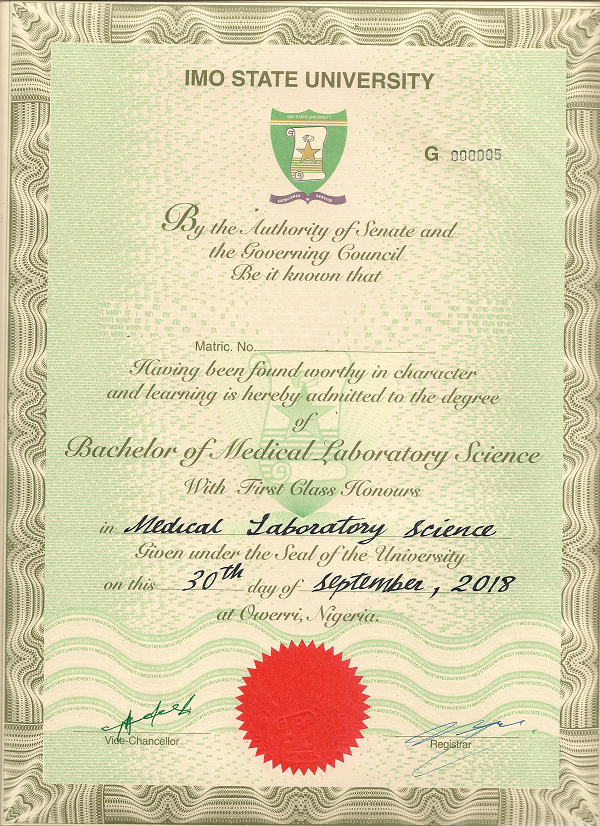
Steps on How to Apply for Certificate in Imo State University, Owerri (IMSU)